Friday, September 18, 2020

Rosh Hashanah, Feast of Trumpets

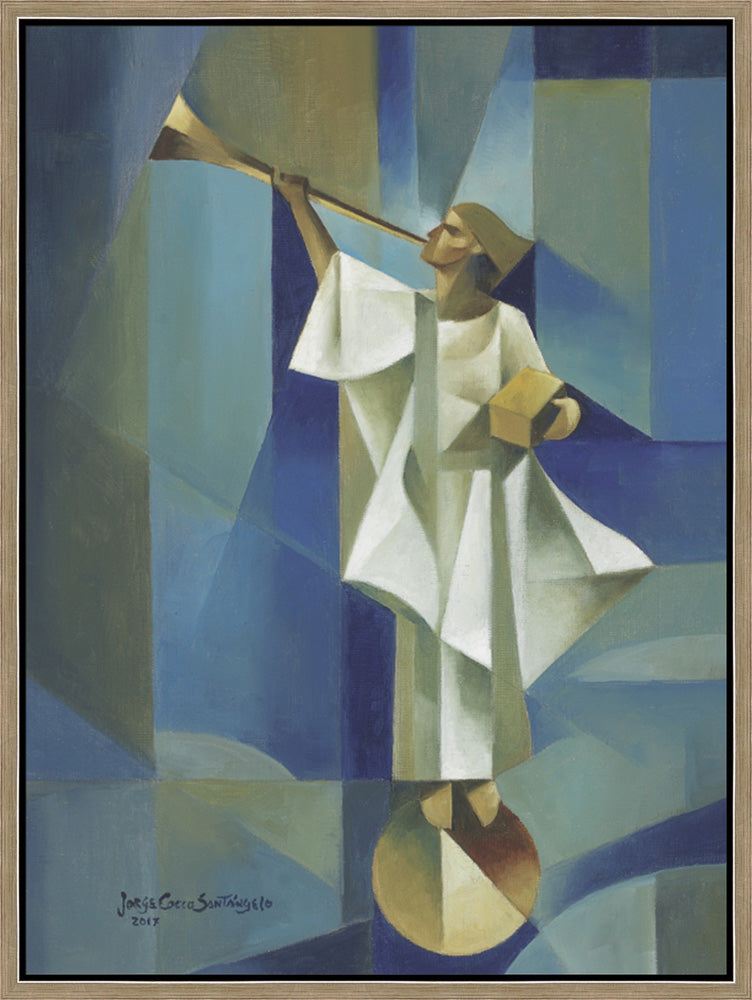
Angel VIII by Jorge Cocco | Altus Fine Art
"Angel Moroni" by Jorge Cocco (click to purchase)  

What is Rosh Hashanah?

Rosh Hashanah (in scripture, the Day of Remembrance or the Feast of Trumpets), welcomes God as Sovereign King/Master of the universe and Judge, invites Israel to repentance, and initiates the gathering of the fall harvest and Israel. The shofar is blown three times on Rosh Hashanah, affirming God’s kingship, God’s covenant, and God’s Messiah. 

This year, Rosh Hashanah begins at sundown on September 18.

Themes

  • God’s Kingship: Trumpets & God as Sovereign King/Master of the Universe

    • Shofar heralds arrival of the king

    • “We are not the ones in charge of the world…no matter how free and powerful we may be, the world is not ours to control, exploit, or dominate” (Kushner, To Life!, 109)

    • Humility 

      • Kindness to God’s creations

      • Let go of perfectionism and social justice fatigue

  • God’s Covenant: God as Judge

    • Invitation to repentance, “return to God”

      • “ The gates of repentance remain open until the Day of Atonement“ (Kolatch, Jewish Book of Why, 222)

    • God judges past year: Our deeds count, God cares about what we do

      • Punishment AND reward, it’s not only about mistakes

    • God judges/writes year ahead: Faith can arm us against and through the uncertainties of life

    • God’s promise of mercy

    • New year:

      • Examine our lives during the past year

      • Hopes, prayers, and intentions for the year ahead  

  • God’s Messiah: God as Lord of the Harvest & Gathering

    • Beginning of fall harvest - thanksgiving

    • Looks forward to Messiah and gathering of Israel

(For Latter-day Saints, consider the parallels between these themes - trumpets, covenant/judgment, and gathering - and the Restoration, especially the Book of Mormon, which is announced by Moroni's trumpet and prophecies both of the gathering and judgment of God's people. Further, the golden plates were given to Joseph Smith on Rosh Hashanah!)

Symbols

  • Shofar (ram’s horn)

    • welcomes God as King

    • sound of celebration and victory

    • remembers near-sacrifice of Isaac and God’s providence of a ram

  • Apples & honey - hope for sweet new year

  • Pomegranate - many seeds, symbolize hope that new year will be filled with many good deeds 

  • Round challah (bread) - circle of the year, crown for God

  • White clothing, curtains, tablecloths, flowers

  • Bird

    • “As hovering birds, so will the Lord protect Jerusalem“ Isaiah 31:5

    • “reflects the hope that man’s prayers will be carried heavenward“ (Kolatch, Jewish Book of Why, 234)

Scripture

  • Lev 23:24-25

Rituals

  • Rosh Hashanah Seder meal

  • Tashlich - cast off sins (crumbs in moving body of water)

    • Sins: mistakes, sorrows, evil/wickedness committed by and against us

Traditional Food

“New fruit” (something never tried before)

Round challah (bread)

Apples

Honey 

Pomegranate

Fish

Dates

Head (lettuce, fish cookie/cracker)

Rubia (Green string beans or sesame seeds)

Karti (leeks or scallions)

Silka (beets)

Gezer (carrots)

Kara (pumpkin or gourd)

Resources (Clickable Links)


For Latter-day Saints:

Sunday, September 6, 2020

"Who do you say I am?": A Testimony


God is difficult. God is unseen. God can be hard to find sometimes.

God is a symbol, a metaphor. God represents our deepest aspirations for ourselves and the cosmos. God is a vision of what could be, and the strength to make that vision a reality. 

God is the energy of electrons vibrating. God is the constant expansion of the universe, and God will be its collapse. God is photons. God is whatever magic that turns sunlight into food. God is breath, God is the mechanism that turns glucose into movement. God is the energetic connection between people. God is love.

God is healer and God is healing. God is our immune system and herbs and doctors.

God is justice. God is listening to the marginalized and oppressed. God speaks in their voices. God's righteous indignation pours out upon the oppressor and the unrepentant. 

God is Black Lives Matter. God is a dead black body, shot in the back 7 times. God is the tears of a bereaved mother. God is the child whose parent lies in a grave. God is the signs held high, God is the sweat that falls for hours in the hot sun, God is the water and powerade donated buy strangers. God is the fire that demands we see and hear the enslaved, just as God was the fire on Mt. Sinai. 

God is reconciliation, repentance, forgiveness. God is a new path through the wilderness. God is a shadow by day and pillar by night. God is the Rock that gives Living Water. God is our food, our drink, our strength. God is our refuge, our shelter, our very present help in time of trouble. God is our comfort, our peace, our joy. God is the smile of a friend. 

God is the sovereign king over all the earth, whose we welcome with trumpets. God calls us to repentance, to change, to transformation into the image of Christ. God gathers us in as we gather the fall harvest. God is judge, attentive to our deeds and sealing us in the Book of Life. God is atonement - the opportunity to change, make things right, start anew. 

God is near, within every cell. God is every song I sing and every tear I cry. God is life itself. 

Thursday, April 9, 2020

Maundy Thursday: The Gospel Story is Our Story


A week that began with praises grows more difficult. 

One day, at the home of a friend, a woman anoints Jesus’ head with oil, preparing him for burial. 
Like Jesus, we have been prepared by loving companions for the difficult road ahead of us. 
Let us not turn our eyes away from the difficulty. 

Jesus tells his disciples to prepare a place to celebrate Passover. 
Like the disciples, we have been given commands from Jesus. How will we prepare for Him?

At evening, Jesus gathers with his friends to celebrate the Passover meal. 
A meal rich with symbolism, a meal that begins in the darkness of slavery and rejoices in God’s light of liberation. 
A meal that recognizes our own darkness, and hopes for God to bring light again. 
Jesus eats this meal with his friends. 
We eat this meal with Jesus. We, too, hope for God to turn our darkness into light. 

Jesus knows what his future holds. His heart is heavy. 
He takes the bread, thanks God for it, breaks it, and shares it - the Bread of Life.
He takes the cup, thanks God for it, and shares it - Living Water, the cup of Salvation. 

After the meal, Jesus and his friends sing a song of praise to God.
They go out to the Mount of Olives, to the garden called Gethsemane. 

Jesus says to his disciples, “Wait here, while I pray. I’m very sad - as if I’m dying.”
Like Jesus, we have felt grief so heavy it felt like we were dying.
Like the disciples, we have been asked to witness the heavy grief of our friends. 
Like Jesus, we retreat to pray. 
“Father, for you, all things are possible. Let this cup pass! Nevertheless, not my will but thine.”

An angel appears to strengthen Jesus. 
Like Jesus, we have received divine help in our time of need.
Like the angel, we have been a blessing and provided strength to those around us. 

Jesus returns to find his friends sleeping, overcome with grief. They have let him down.
Like the disciples, we have been overcome with grief, grief so heavy we feel we cannot move. 
Like Jesus, we have been disappointed by our friends. 
Like the disciples, we have disappointed our friends and our God. 

Judas arrives with a crowd carrying swords and clubs. 
Judas betrays his friend, and Jesus is arrested.
Like Jesus, we have been betrayed by those we called friends. 
Like Judas, we have betrayed our friends and our God.
Like this crowd, we have captured Jesus and taken him to be judged. 

All the disciples leave Jesus and run away. 
Like Jesus, we have been abandoned. 
Like the disciples, we have abandoned our friends and our God. 

Jesus is led to Caiaphas, the high priest. A crowd bears false witness, telling lies, and spits in Jesus’ face.
Like Jesus, we have been victim to lying foes.
Like the crowd, we have told lies. 
Like Jesus, we have been mocked and scorned.
Like the crowd, we have mocked and scorned the image of God in those around us. 

Meanwhile, Peter denies Jesus three times - just as Jesus predicted.
Like Jesus, we have been denied and left alone by those whose we thought would stay with us. 
Like Peter, we have denied our friends and our God. 
Like Peter, we have realized our mistake and cried uncontrollably. 

What will tomorrow hold?

Can it get worse than this? 

Wednesday, February 26, 2020

Ash Wednesday & Lenten Invitations

For several months, I have felt estranged from God. I have not attended Sunday services or meetings. I have not prayed. I have not read scripture. I have interacted with social media communities, and participated in family scripture study and prayer about once weekly. Even with those - my heart hasn’t been in it. I haven’t sensed a connection to the Divine, to the Beyond. Discussing scripture was like discussing the weather; participating in prayer was no more than listening to the words of another. 

Today, I decided to attend an Ash Wednesday service. For the past handful of years, the seasons of the church year have become increasingly important and meaningful to me. Last Advent, I decided to create a home altar with candles, statues, and colored cloths for each season of the liturgical calendar. I decided that I wanted to incorporate the seasons into the rhythm of my home and life. I wasn’t sure how to do that, but I knew I wanted to. So with Lent approaching, I knew an Ash Wednesday worship service with the Body of Christ would start me off. 

And boy was I right. More right than I expected. 

I deliberated through the day about where I would go for service (remember, I haven’t been attending church; I have no home). All I knew was that I needed Communion; I needed the Eucharist; I needed the Bread of Life. I’m not sure I would have been able to explain why. I just knew in my soul, in my bones, that I needed it. So I searched for a church that was sure to offer this gift to me. 

Divine Providence brought me where I needed to be, I believe. Just before 7, I headed to the nearest United Methodist Church. I reached for the door handle - locked. I walked around the corner to another entrance - locked. And the next - locked. I checked the website to discover the 7pm service was at a different location. Reluctantly, I walked to the Episcopal church across the street (they also had a service at 7).

I was early - the sanctuary was sparsely populated and filled with a stillness. The altar seemed bare. 

The service began. The priest gave a sermon about the origins of Lent as a time when converts prepared for an Easter Sunday baptism, a time when estranged members who had committed grievous sins prepared to reenter the community, a time when indeed the whole church took time to reflect on their own baptism, take inventory, and recenter their life on Christ. He spoke of Edward Hays’ book, “Lenten Hobo Honeymoon,” and the origins of the word “hobo.” After the Civil War, this word referred to people who were “homeward bound.” Hobo - people who would do anything just to get back home. This is the message of Lent, he said: You can go back home. Jesus came so we can go home. 

The minister continued, proclaiming, “People of God: The first Christians observed with great devotion the days of our Lord’s passion and resurrection, and it became the custom of the Church to prepare for them by a season of penitence and fasting. This season of Lent provided a time in which converts to the faith were prepared for Holy Baptism. It was also a time when those who, because of notorious sins, had been separated from the faithful were reconciled by penitence and forgiveness, and restored to the fellowship of the Church. . . . I invite you, in the name of the Church, to the observance of a holy Lent, by self-examination and repentance; by prayer, fasting, and self-denial; and by reading and meditating on God’s holy Word.” 

The Spirit moved within me. I want to observe a holy Lent. I want to prepare for the feast of the Lord’s passion and resurrection. I want to prepare to renew my baptism and its covenants at Easter. I want to be reconciled and restored to fellowship. I want Jesus. I need Jesus. Jesus, I cried, take me home. 

We received ashes as a sign of our mortality and penitence, remembering that it is only Jesus who grants us life. We continued through the liturgy to the memorial of Christ’s death and resurrection, the Eucharist. A word that translates to “good gift.” 

As I ate the Body and Blood, the Bread of Life and the Fruit of the Vine, I was overcome with gratitude. The love of God was thick in the air. Christ is truly present, I thought. Christ loves me, embraces me, calls me home. The words of Christ came to mind: “Repent, and return unto me, that I may heal you” (3 Nephi 9:14, paraphrased). With a Mother’s love, God waits patiently. God does not grow weary of me; God’s welcome will never expire. 

As I walked home, a song ran through my mind: “All my life You have been faithful, and all my life You have been so, so good. With every breath that I am able, I will sing of the goodness of God . . . Your goodness is running after, it's running after me. . . . My life laid down, I'm surrendered now, I give You everything” (Bethel, “Goodness of God”). 

At home, I began working on my altar. I removed the green cloth of Ordinary Time and replaced it with a purple cloth - purple, symbolizing royalty, penitence, and waiting. I felt as Nephi, being "led by the Spirit, not knowing beforehand the things which I should do” (1 Nephi 4:6). “Nevertheless I went forth,” finding an index card and writing what the Spirit laid on my heart. 


Lenten Invitations
  • Prayer: Lord’s Prayer, Hail Mary, Book of Common Prayer Lenten Collects
  • Scripture: Book of Mormon
  • Communion & Sacrament: Gather with the saints to celebrate Eucharist

I must make one thing clear - these are not goals. These are not things I hope to do. These are invitations. God has invited me to use these practices as a means of grace, to partake of God’s presence and goodness. There is no obligation here, only open arms. God invites me to come to the table. 

Another note - “For the Lord God . . . speaketh unto men according to their language, unto their understanding” (2 Nephi 31:3). I firmly believe that the Divine Power can and does communicate with people in their own language. God meets us where we are and uses many means to connect with us. And I believe God welcomes all our efforts to experience God’s presence. You’ll notice that the invitations God laid on my heart are eclectic - Catholic and Anglican prayers and Mormon scripture (and who knows which saints I’ll gather with to celebrate the Eucharist!). I don’t find issue with this. I meet God when I pray, “Our Father, who art in Heaven.” I meet God when I pray, “Hail Mary, full of grace.” I meet God when I read the Book of Mormon - more than in any other book. I firmly believe that God is okay with that. God is big enough to accept any and every human offering. 


And now, I extend and invitation to you. I invite you to spend a few moments in quiet, asking the Great Unknowable how you might come to experience Its glory more fully during this Lenten season. How can you observe a holy Lent? How can you prepare to celebrate the glorious mystery of rebirth? What will bring your soul to life? 

Saturday, January 11, 2020

The Reluctant Dragon: Discussion Guide for Parents

Walt Disney Pictures, 1941

All information below is general suggestions and ideas. 
Always adapt to your family’s situation and beliefs and the needs of individual children. 

Content Warnings:
  • Guns - Man pretends to hunt plastic ducks.
  • Tobacco - smoking, cigarettes and cigarette butts
  • Alcohol - momentary exposure at a celebration

Discussion Questions
  • Mr. Benchley learns about making movies at the Walt Disney Studios. Why is it important for us to learn new things? 
  • When making movies, there are teams for everything - a team for music, a team for words, a team for drawing characters, a team for drawing the background, and more. Why is it important to work in teams to complete big projects? How is this like the Body of Christ? (Think about how each of us has a different role to play, and each part is important to the whole of God’s plan!) What is a job that you do in the Body of Christ? 
  • Mr. Benchley sees the storyboard for a new film, “Baby Weems.” Why is it important to have a plan when beginning a project? What do we do when things don’t go according to plan? 
  • In the short, “The Reluctant Dragon,” the boy, his father, Sir Giles, and the whole village expect that the dragon is the kind that attacks villagers, devours flocks, and kidnaps damsels. The dragon turns out to be a poet who does not want to fight. What is the danger of assuming things about others before we get to know them? 
  • God created everything. We are God’s children and are made the image of God. This means that we can be like God. When people create things, they are becoming like God, who made everything. What do you like to create? What are other ways that we become more like God? 

Scripture Connections
  • Learning. Prov 1:5; Dan 1:17; Luke 2:52; 1 Nephi 1:1; 2 Nephi 9:29; D&C 88:118, 90:15; 93:36, 93:53, 130:18
  • Body of Christ. Rom 12:4-21; 1 Cor 10:17, 12:13-31; D&C 107:99
  • Children of God, Image of God. Gen 1:26-27; Deut 14:1; Ps 82:6; Acts 17:29; Rom 8:16; 1 Nephi 17:36; Mosiah 7:27; Ether 3:15; D&C 20:18, 76:24; Moses 1:13, 2:26-27, 3:5, 6:9, 6:68; Abraham 4:26-27

Ideas for Further Study

  • Learn to draw a favorite character from a book or youtube tutorial. 
  • In the film, artists learn to draw by having a live elephant or baby in their studio. Learn about the research that was done to make one of your favorite movies - did they look at animals, too? Did they research another country’s music or clothing? 
  • In the film we see a team creating the sound effects for a movie. Try making your own devices for sound effects. 
  • This film starts off in black and white but switches to color. Research the invention and use of Technicolor. 
  • Learn more about the multi-plane camera. Who created it, and when? How does it work? 
  • In the “Rainbow Room,” paint is mixed into all different colors. Do some art and experiment mixing different colors. 
  • How has the process of making movies changed from this movie to now? 
  • This film shows us all the things that go into making a movie - animation, music, voice, sound effects, operating the multi-plane camera and more. Try incorporating all these elements and making your own movie!

Saturday, January 4, 2020

Saludos Amigos: Discussion Guide for Parents

Walt Disney Pictures, 1943


All information below is general suggestions and ideas. 
Always adapt to your family’s situation and beliefs and the needs of individual children. 

Content Warnings:
  • Some middle scary scenes - thunder/snow storm. 
  • Tobacco - cigars

Before Beginning:
Be wary of outdated cultural presentations, like the description of music as “strange and exotic.” Discuss with children that other cultures are not objects to be observed, but real people just like us. 

Discussion Questions
  • In this film we see portrayals of other cultures. Why is it important to learn about other cultures? How can we be careful to avoid stereotypes? 
  • The little airplane Pedro took his first journey to deliver mail over the Andes mountains. How did he feel before, during, and after his journey? What difficulties did he encounter? How did his parents feel? What was a time you had to do something new? How did you feel? What difficulties did you encounter? How do you think God felt when we do something new? 
  • Donald Duck met a new friend, Jose Carioca, who lives in a different place, speaks a different language, listens to different music, and eats different food. Tell about a time you met a new friend who was different from you. 

Scripture Connections
  • Diversity. Gen 11:1-9; Ezek 47:22; 1 Cor 14:26; Eph 4:6; Col 1:16-17; Rev 7:9-10; 2 Nephi 31:3

Ideas for Further Study
  • Research one of the places mentioned in the movie, like Rio de Janeiro, Buenos Aires, Chile, Bolivia, or Peru. Is there someone in your neighborhood whose family history is from Central or South America? Talk to them to learn what it is like to live there.
  • Research the ancient civilizations of Central and South America. Learn about European conquest and colonization of these areas. 
  • Plan an imaginary trip to South America. Where would you go? Where would you stay? What would you like to do there? How much would it cost? Make a daily itinerary and calculate the costs. 
  • Learn more about the gaucho horsemen and horses. See if there is a place near you where you can see or interact with horses. 
  • Learn more about the types of music, dance, and other arts in South America. Is there a person or school in your community that teaches South American music or dance? 
  • Find a recipe for food from South America and make it as a family. 
  • Learn more about native animals in a certain area of South America. 
  • Choose a language that is spoken in South America (there are many!) and learn a few phrases. 
  • Elder Ulisses Soares of the Quorum of the Twelves apostles is the first apostle of this dispensations from South America. Learn more about his life and teachings.