Saturday, November 16, 2019

Pinocchio: Discussion Guide for Parents

Walt Disney Pictures, 1940


Content Warnings:
Disobedience & Lying
Tobacco & Alcohol
Scary scenes - kidnapping, boys turning into donkeys

Before Beginning:
Before beginning, it may be helpful to remind children that this is a pretend story. While it can teach us true lessons, the story itself is not true. 
Pinocchio is often seen as a morality tale against evil. Rather than focusing on fear, Pinocchio's mistakes, and their consequences, I would recommend keeping the focus on forgiveness and redemption. Geppetto and Jiminy Cricket always lovingly support Pinocchio, following after him and encouraging him to choose the right. Remind children that this is the kind of loving care God had towards us (and we should strive to react like Gepetto and Jiminy when our children make mistakes).

Discussion Questions
  1. Pinocchio was interrupted on his way to school and chose to follow Honest John and be an actor instead of going to school. Why is going to school important?
  2. The Blue Fairy describes a conscience as “something that helps you choose between right and wrong, counsels in moments of temptation, and keeps you on the straight and narrow.” What did Jiminy Cricket do when Pinocchio chose to ignore him? Does your conscience respond the same way?
  3. What does it mean to "let your conscience be your guide”? How do you tell the difference between right and wrong, and what do you do if you can't figure it out? 
  4. How is Jiminy Cricket similar to or different from the Holy Spirit? 
  • Ideas: Both help us know right from wrong. Both will stay with us when we most need them. Jiminy Cricket is visible, but the Holy Spirit is invisible.

  1. Pinocchio could have trusted and obeyed his father and Jiminy Cricket, or Honest John and Stromboli. How can we know who to trust and obey?
  2. When Pinocchio is first kidnapped, Jiminy wants to tell Geppetto but worries about being "snitchy." What's the difference between being a tattletale and helping a friend in danger?
  3. The Blue Fairy said, “A lie keeps growing bigger and bigger until it’s as plain as the nose on your face.” Have you ever told a lie that got bigger and bigger? What happened? How do you feel when other people lie to you? 
  4. When Pinocchio didn’t obey his father and Jiminy, he got into some trouble. What kind of things happened?
  • Note: This may be an appropriate time to discuss where real-world consequences may differ from those in the film. Assure your children that they will not, in fact, be turned into donkeys. 

  1. Pinocchio had many people around to help him - the Blue Fairy, his father, and Jiminy. How did these people react when Pinocchio made mistakes?
  • The Blue Fairy forgave Pinocchio and gave him another chance.
  • Gepetto loved Pinocchio and went out searching for him. 
  • Jiminy always stuck by Pinocchio to help him make better choices. 


  1. How is the story of Gepetto and Pinocchio similar to the Plan of Salvation?

  • Gepetto created Pinocchio and God made us.
  • Gepetto loved Pinocchio very much. God loves us very much.
  • Gepetto hoped Pinocchio would make good decisions, and God hopes we will make good choices.
  • When the Blue Fairy brought Pinocchio to life, Pinocchio was given the ability to choose how he would act and whether he would obey his father. God gives us agency to choose whether we will obey. 
  • Pinocchio made mistakes, just as we make mistakes during our earth life.
  • Pinocchio experienced negative consequences when he was disobedient. We, too, experience consequences when we are disobedient. 
  • No matter what Pinocchio did, Gepetto kept looking for Pinocchio, hoping he would come home and be brave and honest. No matter what mistakes we make, God is always nearby, hoping that we will repent and turn back to God’s way. 
  • At then end of the movie, after Pinocchio had been tested and proved himself, he became a “real boy” (not made out of wood). After we have been tested and proved that we will be faithful, we will become “real,” with a glorified, perfected body. Our new bodies will be different and better, just like Pinocchio’s new body was different and better.  


Scripture Connections
  • The Prodigal Father. Luke 15:11-32
  • Jonah and the Big Fish. Jonah
  • Plan of Salvation. See True to the Faith, “Plan of Salvation” for an overview and scripture references. 
  • Education. Dan 1:17; 2 Nephi 9:29, 28:30; Alma 37:35; D&C 88:118, 90:15, 93:36, 93:53, 130:18; See Bible Dictionary, “Education”
  • Lying/Honesty. Lev 19:11; Ps 101:7; Proverbs 12:22; Acts 5:4; 2 Cor 8:21, 13:7; Eph 4:25; Phili 4:8; Col 3:9; 2 Nephi 28:8; Alma 27:27; D&C 42:21
  • Courage. Alma 53:20
  • Integrity. Job 2:3, 27:5, 31:6; Prov 20:7; 1 Nephi 2:10; Alma 24:19, 27:27; D&C 5:22; Joseph Smith History 1:25
  • Discernment. 1 Kgs 3:5-15; Isa 11:3; 1 For 12:10; Alma 12:31; 3 Nephi 11:3, 24:18; Ether 4:12; Moro 7:15; D&C 11:13, 101:95
  • Tobacco & Alcohol. See “Word of Wisdom,” D&C 89 and footnotes. 

Ideas for Further Study
  • Read The Adventures of Pinocchio by Carlo Collodi.
  • Learn about Germany at the time of Pinocchio. 
  • Research the effects of tobacco and smoking on our bodies. 
  • Learn about whales like Monstro.

References

Nancy Davis Kho, “Pinocchio,” Common Sense Media <https://www.commonsensemedia.org/movie-reviews/pinocchio>

Friday, October 25, 2019

What will this Season Hold?

This is a loaded time of year for me.

Halloween 2012 sits in my memory as the day my eating disorder shifted from a creeping crawl to a sprint. I had just gone away to boarding school, and my parents sent a package of treats just in time for the holiday. That night, I shared these with my roommates. I remember the overwhelming guilt and shame as I realized that I was eating far too much (forgetting, of course, that I was with friends, all eating the same amount as me). Humiliated and mortified, I concluded that I had eaten enough for this day and the next - no, two days more - no, three days more. The next morning, I fasted.

October 2018: I teach a Sunday School lesson on Reformation Sunday, my first as what would become Interim Children's Ministries Director at the church where I worked as an assistant. We didn't have a curriculum that year, so part of my job was to gather disparate lessons and 4-week curricula off of the internet and create large group and small group lessons for our 1st-4th graders. In November, we discussed gratitude - on All Saints Day, gratitude for the church universal; on Veterans Day, gratitude for our country, our military, and our God who "always has our 6" (I've linked the video at the end); during International Bible Week, gratitude for the God's word. We finished November celebrating Christ the King Sunday, the Sunday preceding Advent, preceding our wait for a humble babe, honoring the King of Kings and Lord of Lords. The King of Heaven, grand and majestic, will become a babe for our sakes. Then we went into Advent - we talked about the symbolism of green and red, or pink and purple, of the Christmas tree and Christmas wreath and Christmas lights, all pointing to Jesus. We talked about God's gifts to us in Jesus - hope, love, joy, peace. We waited for our king. It was a beautiful, wonderful time.

During those same months, my grandmother was dying. In her final weeks, I basically moved in to spend as much time with her as possible. I have fond memories of us all gathering in her bed in the evening, watching game shows, working on college papers, eating ice cream. It was a beautiful, wonderful time.

September 2019: I am a graduate student. It is far more stressful than I imagined it would be. One evening, I miss dinner. When I wake up in the morning, the switch has flipped. I'm back in my eating disorder. I fight and give in and fight and give in all fall. During December and January, my weight plummets. I am hospitalized as a suicide risk. I enter intensive treatment for my eating disorder.

This year, I find myself torn. I have held my breath - this is the time in the semester when I started restricting again. This is the time in the semester when I started getting behind in my work. I worry that last year will repeat itself. Halloween approaches - this holiday difficult every year.

At the same time, my heart jumps wen I see "All Saints' Day" on the calendar, when I picture my Jesus, Christ the King, enthroned in glory, when I consider how I will observe Advent.

My heart rejoices, and my heart sorrows. There is both. Both are real. I wonder what this season will bring.


Sunday, August 18, 2019

Leaves


When you close your eyes and dream,
what is it that you see?
I know your heart is big,
your aspirations wild,
your mind clouded with timidity.
You weren’t made to be afraid -
you were made to live
the life you have been given! 
If you laid down your life
for someone that you loved
you’d want them to live freely -
without guilt,
without fear;
you’d want them to live generously,
to do the things they dream of.
One day you will be gone,
there’s no avoiding death.
So do it before you’re blown away, 

like leaves in a windstorm. 


July 18,2011
Zephaniah 2:2

Monday, November 26, 2018

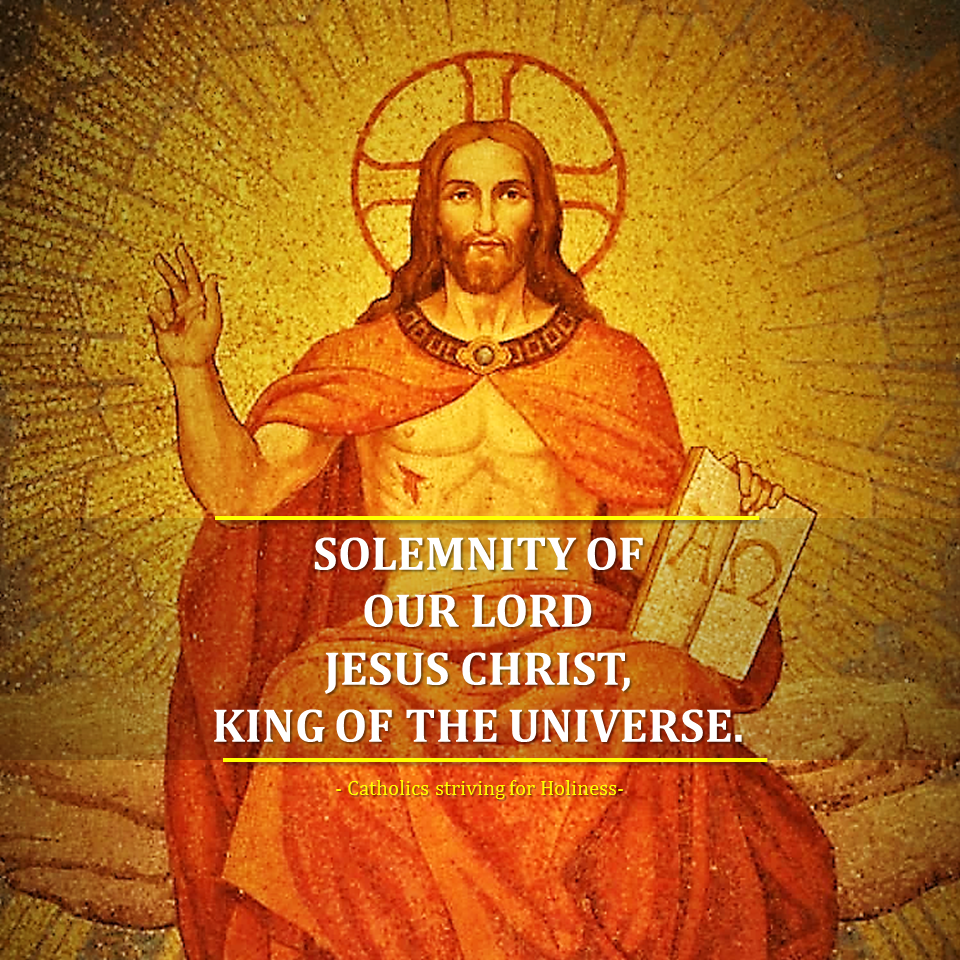
Christ the King Sunday: A Different Kind of King

One year ago, I was a new Methodist Sunday School teacher. I didn't know what I believed.

I began teaching the first Sunday in November, and our theme for the month was thankfulness. We celebrated All Saints Day with gratitude for saints and the church universal, Veterans Day with gratitude for veterans and God's protection, National Bible Week with gratitude for scripture, and ended the month with Christ the King Sunday before moving into Advent - a season of waiting for God in the form of a baby.

At this time, I really had no idea what I believed, especially about Jesus. I didn't even know if I believed in Jesus! But here I was, writing a lesson on Christ the King?

I decided to focus on the figure of Jesus Christ in the gospels and the way that this character is presented as a king utterly opposed to the kings of his day. Christ is King of the World, as Natalie Grant sings, but He is a different kind of King. Jesus is not greedy but generous, not violent and warring but gentle and kind, not a dictator but a servant. The people were expecting a king and they got something completely different.

Christ is in charge of this whole thing. I believe in the Christ principle - as the spirit or energy that animates and courses through the universe, in each of us. Some might call it the Light of Christ, the Inner Light, or the atman. But that principle, that true self, I believe, is pure, true, loving, and ruler of all. And I devote myself to the pursuit of this principle within myself by worship the anthropomorphic Jesus Christ, a character described in the New Testament, the Book of Mormon, and other texts.

Christ the King Sunday recognizes Christ as King and Ruler over all the earth. We recognize our submission and obedience to Christ. We rely on Christ and we remind ourselves that evil does not rule, but Christ does. Love does. Love is in charge. NO matter how dark it looks, Christ is in charge.

I focus my trust on King Jesus as a different kind of King. We have lots of thoughts about what kings are like. And Jesus, with all his power, is none of those. And I am so grateful and willing to submit my life to this gentle, generous, different kind of servant King. My Lord and my God!

Who was ANNA THE PROPHETESS? What did she know about Jesus?
Anna the Prophetess: Luke 2:21-38

Sunday, September 9, 2018

Faith: Our Response

The way I understand God has changed the way I do some things. It's caused me to be more intentional about the things I do, rather than just going with the flow of what's popular or easy (and our culture does so much simply because it's "easy"). 

Here are some things that I’ve been interested in, gotten interested in, started considering, changed in my life, care about because of who God is, etc. These are things that might (hopefully!) start popping up on the blog. These are things that may seem trivial or unrelated, but are tied up with my experience and understanding of God. 

  • Fair Trade - if every person on this planet is God (and the author of the Gospel according the Matthew assures us they are), then every person deserves to be treated with dignity. They deserve to work reasonable hours, receive reasonable pay, and be safe on the job. 
  • Organic food - Eating organic, for me, is not about nutrition. Studies show that organic foods don’t really have more nutritional value than other farming methods. I choose organic when possible because of the way it cares for the land. We should all care better for the land. It’s our home. For folks claiming Abrahamic religions, God said a lot about how to treat the land in the Hebrew Bible! 
  • Minimalism - As I grow deeper in my understanding of God, the more I realize that STUFF won’t make me happy. We don’t need more stuff! Our consumeristic and throw-away culture tries to convince us that we need the newest stuff all the time - whatever bought last week isn’t good anymore so we should throw it away and buy this new toy! So people work themselves ragged to afford the new, cool stuff that they “need” to have, but no one’s happy with that. My goal is to do more with less. To spend less time working for money to buy stuff. To make enough money to buy what I need, and spend the rest of my time actually enjoying life, rather than running on the treadmill to get more things. 
  • Low Waste - This kind of goes along with the previous point. A consumeristic culture is a wasteful culture. Our culture encourages us to throw things away at the first sign of wear (or even before that!) and buy something new. We mistreat our planet by taking more resources than we need, mass producing goods in factories creating pollution and abusing workers, and then dumping those good in landfills to buy the next thing. It’s ridiculous! Lately, I’ve been trying to reduce waste where I can. And surprisingly, it’s been easier and more unintentional than I intended! I might say the Holy Spirit is leading and encouraging me in the work - showing me simple ways to reduce waste. Really, it’s easier than I thought, and I find myself transitioning to low-waste alternatives almost without thinking about it!
  • Feminism - If we’re all one, then men and women are one. We’re the same. That’s about it. Sushi rolls, not gender roles.
  • “Natural” movement - We are gods and goddesses, y’all. Kings and queens. We are existence itself, we have the breath of the Almighty in our lungs. We have evolved over millennia into one of the most complex creatures on our planet (the most complex? I'm not a scientist). However you swing it, we are divine. I think our bodies pretty much know how to operate. I won’t say we’re perfect, because things DO go wrong. But for the most part, I believe that our bodies know what they’re doing. When we’re ill, I believe the power of our bodies to heal themselves. When we’re giving birth, I believe the power of our bodies and our babies to know what to do. When our body does something without us thinking about it - like heart beating or hair growing or uterine lining building up and being shed - I think it’s probably a wise thing for our body to do and that maybe we should let it do its thing. I believe in the power of living things to feed and heal other living things. I try to eat food and use “medicine” that’s as close to being alive as I can get it - fresh fruits and veggies (grown locally is ideal!), meat and from local farms, teas and other herbal remedies for minor illness. 
  • Social Justice - This one is so broad. Some of the above bulletpoints can be included in this one (fair trade, feminism), but I need to include it because it encompasses so much more. Racism, economic inequality, and more. Biblical religions should be fighting for social justice because the Hebrew Bible so clearly calls for it. And religions like Hinduism or other indigenous traditions call for social justice in their claim that every person is a manifestation of God. We are called, whoever you are, whatever you believe, to care for others. And that can't always happen individually. Greed and pride have woven a system in our society, a system that benefits some at the cost of others. In order for a truly just world, these systems have to be broken down. We can't fix the problem simply by handing out sandwiches on street corners (though that is GOOD work and it is a vital part of the solution) - sandwiches are not the whole solution. The whole solution calls for people to come together and fight systemic injustice and work for the establishment of a new system. 

There’s more for sure, but that’s what I can think of right now. God, y’all. God has changed me. Believing in God and surrendering to the idea that I’M NOT IN CONTROL has been life changing. Understanding that we are all one and trying to live in a way that honors that belief has been life changing. 

I’m young and I haven’t been been doing this faith thing for that long. I know I have SO MUCH to learn. I know I won’t know it all even before I die. And that’s become an okay thing for me. I’ve surrendered my need to understand it all. 

Instead, I trust. I trust that there is a Ground of all Being. I trust the Way. I trust that what has happened was meant to happen. I trust myself to know what to do. I trust others to do what they need to do. I trust the universe to cradle me or break me as fate would have it. I trust the earth to provide my needs. I trust my body to heal. I trust my mind to learn, grow, understand, feel. I trust Jesus. I trust salvation. I trust that there is a salve for our hurts. I trust that there is saving from calamity. I trust that I AM my brother and sister’s keeper, that I am God to them. I am responsible for comforting them. And I trust that the God who is within my brothers and sisters will be the God I need in times of trouble. We are One. 

We are One.


And that makes all the difference. 

Sunday, September 2, 2018

Faith: Emmanuel, "God With Us"

“In the beginning there was existence alone - One only, without a second. He, the One, thought to himself: Let me be many, let me grow forth. Thus out of himself he projected the universe, and having projected out of himself he entered into every being. All that is has its self in him alone. Of all things, he is the subtle essence. He is the truth. He is the self.”
Chandogya Upanishad

“In the beginning God created the heavens and the earth. Now the earth was formless and empty, darkness was over the surface of the deep, and the Spirit of God was hovering over the waters. . . . God created mankind in his own image, in the image of God he created them; male and female he created them."
Genesis 1:1, 27

Hinduism, one spiritual teacher said, “begin[s] by assuming that ultimately the cosmos is a unified whole in which absolute reality and the relative manifestations are profoundly connected” (Living Religions, 77). They call this Absolute Reality, as said earlier, Brahman. But this is not the end! These teachers believed that Brahman resided within themselves. This is called “atman.” It is similar to a soul or spirit in the Christian traditions, but not exactly the same. The Hindu text quoted above describes how Existence, the formless absolute, projected forth from itself all that exists. All that exists is Brahman. But Brahman is the totality of existence. Everything else does not have all of Brahman, all of existence, but instead is a piece of existence. But everything together compromises Existence, the Absolute. 

When I started questioning my atheism a couple of years ago, I began with yoga (Western yoga, involving positions of the body and breathing techniques). Often our instructor would say something reminding us of our shared breath. I breathe out, and my breath goes around the room and is taken in by my neighbor, by the plants in the room, by my other neighbor. When these beings breathe out, I take their breath into my lungs, into my bloodstream, and something that was once a part of them becomes a part of me. We are one.

We have all heard someone say, “You are what you eat.” We often say this as a metaphor, but it’s true. When a child is growing, the matter that grows them taller is matter that was once food. The things we eat are broken down and literally become the stuff we are made of. We are all connected. We are one. 


The Absolute Reality, God, Brahman, is present in all of these things - in my breath, in my food, in my bloodstream. My breath is God. My food is God. My body is God. And the person next to me is God, too. 

“Lord, when did we see you hungry and feed you, or thirsty and give you something to drink? When did we see you a stranger and invite you in, or needing clothes and clothe you? When did we see you sick or in prison and go to visit you?’ “The King will reply, ‘Truly I tell you, whatever you did for one of the least of these brothers and sisters of mine, you did for me.’"
Matthew 25:37-40

When I realized that God is really all around me, I started to rethink my actions. If God is the ground beneath my feet, what does it mean when I throw trash in landfills? If God is a fly, what does it mean when I kill flies who bother me? If God is my sister, what does it mean when I use unkind words? If God is a slave working long hours for little money harvesting cocoa, what does it mean when I casually buy a chocolate bar at the checkout? If I am God, what does it mean when I do anything to harm myself, body or mind? What does it mean when I eat food that is harmful to my body? What does it mean when I dwell on negative thoughts about myself?

If God is a flower, what would it mean to keep more plants in my home and office? If God is a tree, would I think more before using extra paper? If God is a chicken who died to feed me, to give me life, would I think twice before just throwing leftovers in the trash? If God is a man out of work at the traffic light, would I do more than hurry past? If God is my brother, would I spend more time listening to his stories? 

And God is. God is all of those things.

I want my faith to be wide enough to encompass all of these things. I want my faith to touch the food I eat, the plants I keep, the paper is write on, my relationships, my time, my everything. 

Going back to surrender. Daily I remember that I am not in control. I surrender that false idea that I am in charge of my life. I surrender the idea that I am separate or less than. Drink in the truth that everything around me is magic. Everything is connected, and everything is One. That is God to me. 

This understanding has changed the way I do some things. It’s changed the way I see things. It’s caused me to rethink the obvious. It’s caused me to be careful about what I buy, what I throw out, what products I use. 

In the future, I might write about some of the things that have changed in me. I phrase that passively because this was not something I necessarily chose, a decision to make a lifestyle change. I had a realization about the Ground of all Being, I surrendered to that truth, and little by little, my priorities shifted. The things I wanted and cared about changed. 


This post is part of a three-part series. Come back next Sunday for the next post!

Sunday, August 26, 2018

Faith: Big God

I once heard someone described as “deeply and widely religious.” I wondered if that described me. I still wonder if that describes me. I hope to be a person who has deep faith - not just faith that “believes” things, but an abiding faith that trusts in a Higher Power and lets that trust affect the rest of my life. And I also hope to be widely religious - I hope that I will not become so completely entrenched in one type of religious experience that I forget other ways to connect with the Divine. I also hope to be widely religious in that my faith paints a wide brushstroke across my life - not touching one day each week but smearing across and through every decision that I make. Not only what I wear, whether I drink coffee or alcohol, whether I swear, but every single decision I make. What kind of peanut butter I buy, what kinds of things I hang on the walls of my home, how I travel to work and school, how I spend my free time. I worship and believe in a god who is in and through and beneath all things, so it makes sense that every time I touch something, I’m touching God. And I care about how I treat my God. 

I have a fairly complicated faith, perhaps. I’m an eclectic mix of traditions. Sometimes I say I’m Mormon, sometimes Methodist. A little bit Buddhist, a little bit Hindu, and little bit Catholic. 

I’ve found something I love in every tradition I’ve studied. And I can’t see any good reason to not incorporate the truth I find into my personal credo. 

I’m not sure how to describe my view of God. 

Can anyone, though, really describe God?

In The Faith Club (https://www.thefaithclub.com) Priscilla Warner wrote about how she had a religion, Judaism, but no faith. She belonged to a people but didn’t believe in a god. In one of my favorite scenes in the book, she sits in an airplane taking off. She looks out the window and feels awe. The sky extends out beyond as far as she can see. The airplane glides and she remembers, or realizes, that she is at the mercy of someone else. She realizes that she is so small in this great big world and even greater, bigger universe. She is overcome with awe. She’s not scared or frightened by this realization. It takes a weight off, actually. She is not in charge of the world. She realizes that there are so many things in this world out of her control. And she realizes that she’s got to stop pretending like she’s in control of everything. She’s got to stop stressing about being the boss of everything. As she describes her thoughts to her friends later, she uses one word to describe how she felt: surrender. She said, “I think that’s faith.” Knowing that you’re not in control and surrendering to that truth. 

That is what faith is for me. Recognizing that I am NOT in control, and aligning my self with Whoever or Whatever is. Sometimes I call this God, sometimes fate, sometimes tao, sometimes (if I want to be real personal with this force) Jesus. 

The name Jesus is the Latin variant of a Hebrew Yeshua or Ya’hashua. We are more familiar with the Greek rendering of this name - “Joshua.” This Hebrew word translates to “salvation” (similar to how we name children Hope or Faith). 

The root of our English word salvation is “salve.” A salve is “an ointment used to promote healing of the skin or as a protection” or “something that is soothing or consoling for wound[s]” (https://en.oxforddictionaries.com/definition/salve). This is what God is to me and does for me. God is a salve. When I am hurt, I turn to God. I turn to something that is bigger than myself. I turn to something that is unchangeable, something that cannot be hurt by anything I do, something that is eternal. Salvation. Jesus.

I also admire the Hindu concept of what “God” is, what the ground of being is. In the Hindu religion, adherents honor many deities. The greatest, or the One that lies beneath every other deity, “the breath behind all of existence," is called Brahman (“Living Religions,” Mary Pat Fisher, 83). This Absolute is formless and impersonal (it is not a personal being, it does not have personhood or a personality). The gods and goddesses worshipped in Hinduism are seen as manifestations of Brahman, as a window through which some of the light of the Absolute can be seen. Some Hindus will worship one deity with intense devotion, while others will honor several. 


Unitarian Universalism sometimes uses the couplet, “One Light; many windows.” This is meant to acknowledge the single Source of all faith and recognize the differences between traditions. I love this. I believe that everything Divine originates from the same source - Allah, Jesus, Saraswati, Ganesh, the Mother Goddess. I think that all these names and personalities are descriptions of what we have seen through the window. When the Light comes in through the window, when we experience the divine, we can’t experience and comprehend it all. If we could, then we’d be God. But we are not, each one of us, God. God is bigger than all of us. So, logically, no one person would be able to fully understand God. So we take these experiences and encounters and try to put them into words to share with others. We try to understand. And the result, I believe, is these varied portraits of the Absolute. We see different parts of God, and we express what we’ve seen in different ways. 


This post is part of a three-part series. Come back next Sunday for the next post!